

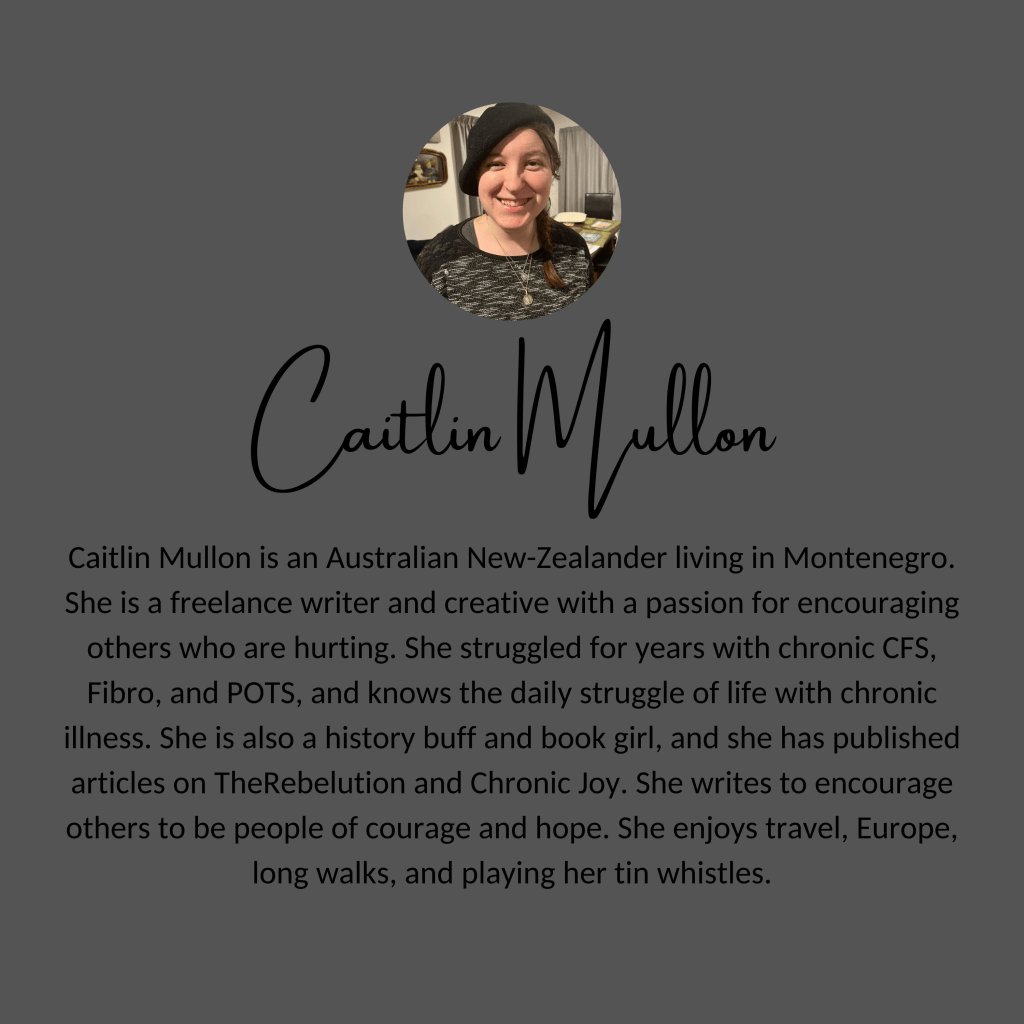
Hello, and welcome to the book club and podcast of The Literary Friends Society, where we find the intersection of books, life, and faith as we journey together through life. I’m Caitlin, a literary book worm, history buff, and coffee drinker, and I’m thrilled that you’ve chosen to join us! If you love books, get your favourite cup of deliciousness, find somewhere cosy, open your favourite podcast app, and let’s get started.
Hello, you’re listening to episode 6 of The Literary Friends Society podcast. I am so glad you have joined us from wherever you are in the world! We are reading through George Orwell’s classic tale, Animal Farm. We are almost finished the book, you guys! This will be our second to last episode discussing Animal Farm. Today we’re doing chapters 8 and 9. Hopefully you’ve had a chance to read them this week, but if not, that’s fine. This episode will catch you up on what’s going on. But I strongly recommend you read the chapters for yourself!
Let’s begin chapter 8. The animals thought they remembered the 6th commandment, “No animal shall kill any other animal.” But when Muriel read it to Clover it read, “No animal shall kill any other animal without cause.” Somehow those last two words had slipped from her memory. “But they saw now that the Commandment had not been violated; for clearly there was good reason for killing the traitors who had leagued themselves with Snowball.”
The animals worked harder. They rebuilt the windmill. It says that they seemed to work longer hours but were fed no better than they were in Jones’s day. Every Sunday Squealer read out a list of figures proving that food production had increased, and the animals saw no reason to disbelieve him. They couldn’t remember what conditions were like before the rebellion, anyway. This is like the media reporting what they want us to hear and what furthers their agenda rather than the facts.
Napoleon wasn’t seen in public much. Orders were issued through Squealer or one of the other pigs. When Napoleon did appear in public, he was attended by dogs and a cockerel. He also lived separately to the others. He commanded that a gun was to be fired every year on his birthday. He was called “our leader, comrade Napoleon”, and other titles invented by the pigs. They called him things like “Father of all Animals”, “Terror of Mankind”, “Protector of the Sheep-fold”, and so on. This part reminds me of the leadership in North Korea. They call their dictator by all sorts of titles, like “our dear leader” and things like that. We end up with pretty much a worship of the leader or dictator. Minimus composed a poem in praise of Napoleon and it was inscribed on the barn wall. The poem said this:
“Friend of the fatherless! Fountain of happiness! Lord of the swill-bucket! Oh, how my soul is on fire when I gaze at thy calm and commanding eye, like the sun in the sky, Comrade Napoleon! Thou are the giver of all that thy creatures love, fully belly twice a day, clean straw to roll upon; every beast great or small sleeps at peace in his stall, thou watchest over all, Comrade Napoleon! Had I a sucking-pig ere he had grown as big, even as a pint bottle or a rolling pin, he should have learned to be faithful and true to thee, yes his first squeak should be, Comrade Napoleon!”
So, we have the worship of the leader. We have the animals seeing him as the source of all they need and love. Totalitarian and authoritarian dictators love this. They love being the “Big Brother” or ‘Nanny State’ or the ‘dear beloved leader’. Like the NZ prime minster Jacinda Arden, they like to be the “sole source of truth.” It’s interesting isn’t it, to see the slow progression through this story from a dream for freedom and equality towards totalitarianism and slavery. And it is slow. None of us wake up one morning and find ourselves in a totalitarian regime. It happens slowly, one small step at a time. One legislation. One small freedom taken. One bit of overreach at a time. Guys, we need to wake up. Thank goodness we are waking up, at least in Australia. This can happen in any country, not just in Soviet Russia. It’s already happening in the West. It’s happening slowly, one step at a time, particularly through covid. The government wants us to depend on them, at least they do in Australia. They want us to look to them for what we need. I can see the benefits of a Welfare State (am I actually saying that!!) but I can’t go into that now. The trouble is when the government goes too far. The government wants to be able to dictate to us how to live our lives. They want to be able to make our choices for us. As far as I’m concerned, that’s going too far. I think that breaks could have been put on this progression by the animals early on in the story had they thought things through for themselves and stuck with the facts (particularly about their history with Snowball and the Battle of the Cowshed) and if they had recognized what was happening as Napoleon slowly grabbed more power and became more dictatorial. What do you think? At what point do you think that this progression towards totalitarianism could have been stopped?
Okay. Then there were rumors that Mr. Frederick might attack Animal Farm.
Snowball was still thought to be sulking on Pinchfield Farm.
3 hens confessed to a plot to kill Napoleon and were executed. More precautions were taken for Napoleon’s safety.
There were stories and rumors about cruelty of Mr. Frederick. Think about the cruelty of Nazi Germany particularly against the Jews.
Snowball is accused of another crime, and a gander confesses to knowing of a plot and commits suicide. Now the animals learn that Snowball didn’t really receive the order of “Animal Hero First Class” but that it was merely a legend spread by Snowball. So we have more revisionist history. This guys, is why it is important to have a good understanding of history and be grounded in what really happened so you’re not deceived by the revisionist stuff. We talked about revisionist history in last week’s episode so if you’re interested in hearing more go back and listen to that. It’s episode 5. Squealer said that Snowball had actually been censored for cowardice in battle and showed again that the animal’s memories were at fault.
We read that the windmill is finally finished!! The walls were twice as thick as before. It was named Napoleon Mill.
Then we find that through a period of seeming friendship with Pilkington, Napoleon was really in secret agreement with Mr. Frederick. Now, I want you to guess what this represents. If Napoleon and Animal Farm represents the Soviets and Mr. Frederick and his farm represent Hiter and Nazi Germany, what secret agreement was made in 1939 and what invasion would this represent? You’re right. In 1939, Hitler and Stalin signed a secret non-aggression pact called the Molotov-Ribbentrop Pact in which the countries pledged not to attack each other. The Soviets were seemingly friendly with the West but were secretly in alliance with Nazi Germany. We read that relations with Foxwood broke off, and Napoleon assured the animals that the rumors about Mr. Fredericks cruelty and possible attack were untrue.
Squealer shows that Napoleon trusted no one. It was the same with Stalin. Stalin learned to distrust everyone, even his closest party-members. That’s part of what made him so paranoid and murderous.
There’s this whole thing with selling the timber to Mr. Frederick and they find that the bank notes Mr. Frederick used to pay for the timber for, was fake.
And the rumored attack from Mr. Frederick came. Tragically, the men blew up the windmill. The text reads, “At this sight the animal’s courage returned to them. The fear and despair they had felt a moment earlier was drowned in their rage against this vile, contemptible act. A mighty cry for vengeance went up, and without waiting for further orders, they charged forth in a body and made straight for the enemy.” So there’s a big battle. Nearly everyone is wounded. I cow, 3 sheep, and 2 geese are killed. The men are wounded too. But the animals got the men running in retreat. They won. But the windmill was gone.
So, let’s go through what happened in 1941 with Hitler’s invasion of the Soviet Union. Operation Barbarossa. The Nazis and Soviets had signed the non-aggression pact in 1939. Stalin saw Hitler as a strong leader like himself and thought that together he and Hitler could take over the world. Part of the pact also was a secret plan to annex Poland between them. In 1941, Germany broke the pact and invaded Russia. Like the animals in Animal Farm heard rumors of the coming invasion of Mr. Frederick Stalin received 90 warnings that the Germans were going to invade, but he dismissed every one of them. As a result, the Soviets were not prepared. The Germans hoped for and needed a quick victory like they had had in the west with the blitzkrieg they took country after country in western Europe. The invasion began on June 22 1941, with 3 million German and axis troops, along an 1800 mile front. It was a three-pronged attack. Army group north marched on Leningrad. Army group center marched on Minsk and then Moscow. And army group south marched on Ukraine. So why did Germany invade? Hitler had plans for Eastern Europe like he had plans for the West. He wanted what he called lebensraum or ‘living space’ for the German people. He expected it would be relatively easy, that he could kick in the Soviet door and the Soviet Union would collapse. But he was wrong. As the Germans approached Moscow, the Soviets pursued their scorched earth policy, burning farmland so that the Germans would have no supplies. The first drive against Moscow was delayed. But Kiev fell, and Leningrad was under siege. In October, the Germans launched Operation Tycoon against Moscow. The Russians were determined to defend their homeland and the Germans underestimated the strength of Soviet resistance. The Red Army beat back the German attack and halted the offensive. The brutal Russian winter arrived. On December 6, the Soviet’s launched a counterattack, and pushed the Germans into retreat. The Soviets were losing at first, but this counter attack was a success for them. The Germans attacked again in 1943, then the tide was turned at the Battle of Stalingrad, August 1942-February 1943, the bloodiest battle of the Second World War. The Red Army defeated the Germans and drove them from Russia. Operation Barbarossa very nearly succeeded, but it failed due in part to military blunders and the Russian resistance and the brutal Russian winter.
Squealer declares a great victory even though it really didn’t feel like a great victory to the beat up animals. They called it the Battle of the Windmill. Napoleon conferred a new decoration upon himself.
Then we find that Squealer has news. Napoleon is dying. There is a rumor that Snowball, ever to be blamed for everything, tried to poison Napoleon’s food.
Then there’s this strange incident that no one can understand.
Then the 5th commandment is changed from “No animal shall drink alcohol” to “No animal shall drink alcohol to excess.”
In chapter 9, we read that they start rebuilding the windmill for the third time.
Boxer’s wounded hoof was troubling him a lot. There is talk about retirement and old-age pensions and how a corner of the pasture was to be set aside for superannuated animals.
Life was hard. Winters were cold. Food was short. Rations were reduced (except for the pigs and dogs). Squealer though proved to the animals that they were not short of food whatever things might seem.
“Reading out the figures in a short, shrill, rapid voice, he proved to them in detail that they had more oats, more hay, more turnips than they had had in Jones’s day, that they worked shorter hours, that their drinking water was of better quality, that they lived longer, that a larger proportion of their young ones survived infancy, and that they had more straw in their stalls and suffered less from fleas. The animals believed every word of it.” The Soviets did used to cover things up a lot. And also, I think let’s not be like the animals and believe everything we’re told, especially in the media. Squealer is not being honest about their situation and is making things seem better than they really are. Remember, a Communist society is supposed to be a utopian society. It’s supposed to be a wonderful place to live. I mean, who wouldn’t want to live on Animal Farm with such a great and wonderful leader as Comrade Napoleon!! The East German government wanted people to believe that life in East Germany was better than life out there in the West. But if life was so wonderful there, then why did so many leave? Why did they have to build a wall to keep people from leaving? You just have to wonder. The animals could hardly remember the days of Jones anyway. All they knew is that it had been worse back then and they didn’t want to go back there.
Then it was declared that the barley would be reserved for the pigs only. So, the pigs continue to get special privileges. So much for all animals are equal! Napoleon also declares the Spontaneous Demonstration which is a great military parade and reminds me of the military parades in North Korea. Have you seen videos of those? They’re quite impressive and a bit scary. The whole society which is supposed to be about the people or the animals rather, is becoming Napoleon centric.
We read, “In April, Animal Farm was declared a Republic, and it became necessary to elect a President. There was only one candidate, Napoleon, who was elected unanimously.” See, the animals have been so indoctrinated and deceived into thinking that Napoleon is a great and beloved leader when really he is cruel and controlling and deceptive and manipulative.
More documents were discovered showing that Snowball had not merely attempted to lose the Battle of the Cowshed, but had openly been fighting on Jones’s side. Do you see as you read the progression of the defaming of Snowball’s reputation? They are twisting and changing things slowly a little bit at a time. Getting you to believe just a little bit at a time. Until you finally believe the opposite of what really happened. Snowball is no longer the hero of the Battle of the Cowshed, but was openly fighting on Jones’s side. And the animals don’t remember what really happened. They’re not thinking through the facts. They’re not standing up to Squealer. They’re not sticking with the truth. They’re slowly deceived a little bit at a time.
Moses the raven has stories of a better land out there and of course the animals believe him too, but the pigs declared that it was all lies.
Okay, now we get to the really sad part. Something awful happens to Boxer, our brave strong workhorse. He was found lying on his side unable to get up. Napoleon made arrangements for him to be sent to the hospital at Willingdon. The animals took care of him and stayed with him when they could. Then one day Benjamin comes galloping down with news that they were taking Boxer away. “Sure enough,” it reads, “there in the yard was a large closed van, drawn by two horses with lettering on its side and a sly looking man in a low crowned bowler hat sitting on the drivers seat. And Boxer’s stall was empty.” The animals were all saying “goodbye Boxer!” But Benjamin is like, “Fools, don’t you see what is written on the side of the van!” Sure enough, it read, “Alfred Simmonds, Horse Slaughterer and Glue Boiler, Willingdon, Dealer in Hides and Bone-Meal, Kennels Supplied. Do you not understand what that means? They are taking Boxer to the knackers!” The animals were horrified and shouted to Boxer to get out. But the van got through the gate, and Boxer was never seen again. So sad.
Three days later, Squealer announced that Boxer had died in the hospital at Willingdon. He told them the moving story of Boxer’s last day and last words. Squealer explained away the writing on the van. It was a mistake, he said, to think that Boxer had been taken to the knackers. This relieved the animals. “And when Squealer went on to give further graphic details of Boxer’s death-bed, the admirable care he had received, and the expensive medicines for which Napoleon had paid without a thought as to the cost, their last doubts disappeared and the sorrow that they felt for their comrade’s death was tempered by the thought that at least he had died happy.”
So thus is the tragic end of Boxer.
And thus concludes this episode. Be sure to join us over at the Discord server for a discussion of these chapters. Also, it would be really wonderful if you could rate and review this podcast on the app you listened to it on, and if you would share it far and wide. It would really help us to get it out to as many people as possible. Thanks guys! Hope you all have a wonderful week. I’ll talk to you soon. Bye!
Sources
https://www.history.com/topics/world-war-ii/operation-barbarossa
You can listen to past episodes here:
https://caitlinmullon.podbean.com/
The Literary Friends Society Book Club & Podcast Animal Farm Aug/Sept 2022
 Cait Pennington Holistic Wellness Coaching & Support
Leave a comment